Introduction
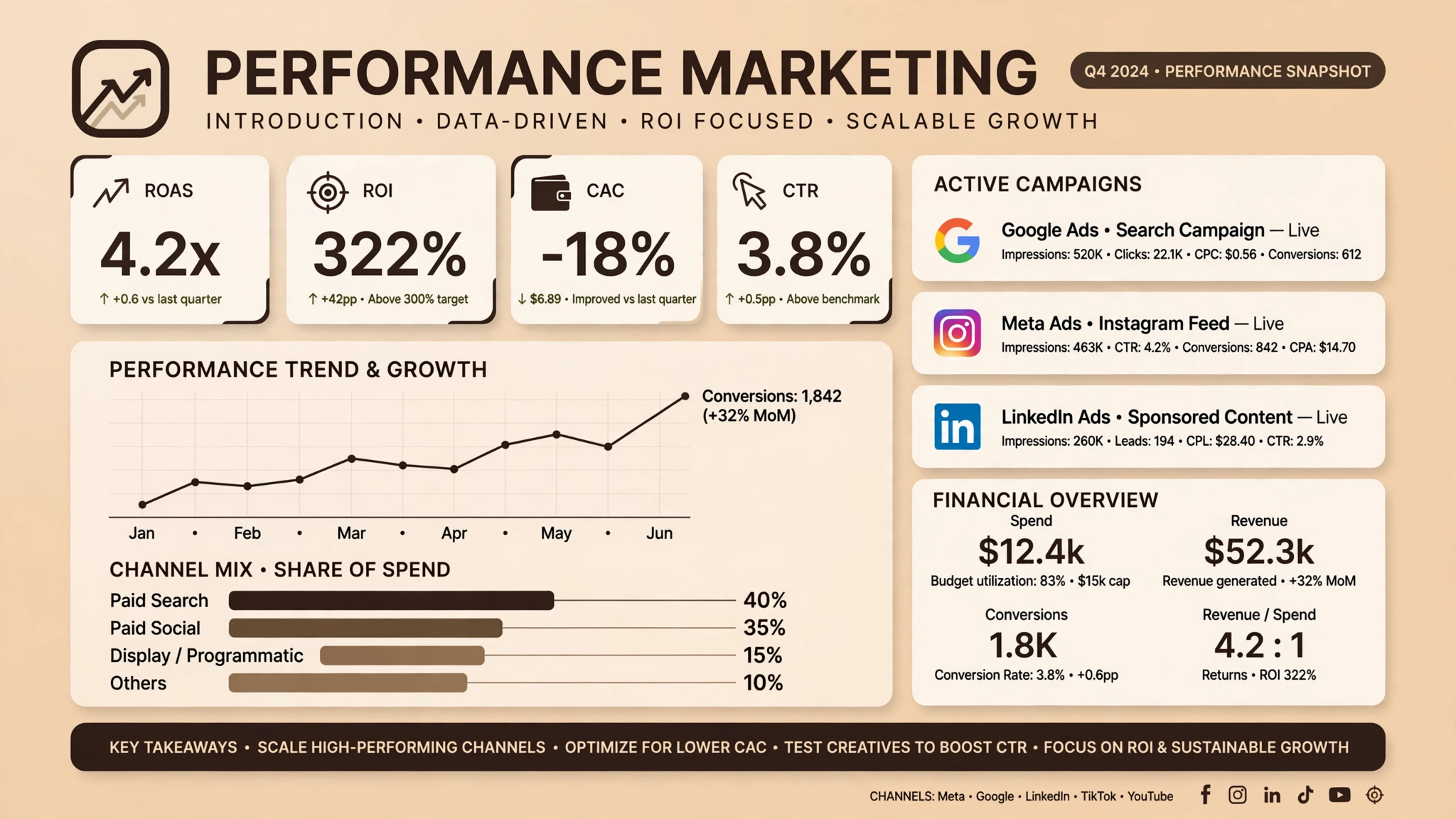
Performance marketing is an important part of digital marketing that focuses on measurable results. Instead of only focusing on how many people see an advertisement, performance marketing looks at actions such as clicks, leads, conversions, and sales.
Today, businesses use different digital marketing methods to reach their audience. SEO helps businesses build organic visibility, while performance marketing can help businesses reach targeted audiences through paid campaigns. When both strategies work together, they can support a stronger digital marketing strategy.
In this blog, we will understand what performance marketing is, why it is important, and how it is connected with SEO and digital marketing.
What Is Performance Marketing?
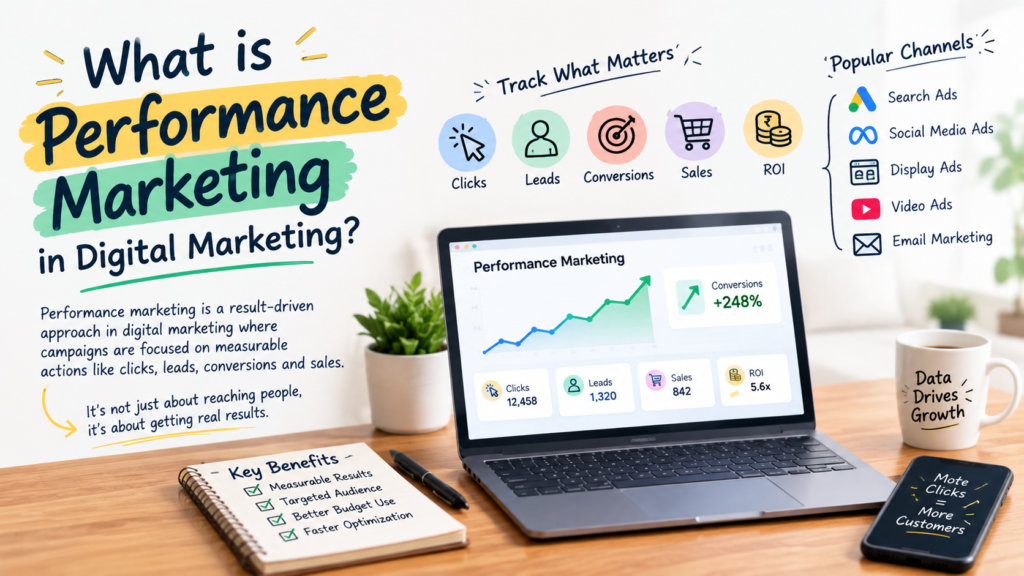
Performance marketing is a result-focused approach to digital marketing where campaigns are planned and measured around specific actions.
These actions can include:
Website visits
Clicks
Leads
Sign-ups
App installations
Conversions
Sales
For example, a business can run an online advertising campaign for one of its services. The business can then measure how many people clicked the advertisement, how many visitors completed an enquiry form, and how much the campaign cost.
This data helps marketers understand how a campaign is performing and where improvements may be needed.
Why Is Performance Marketing Important?
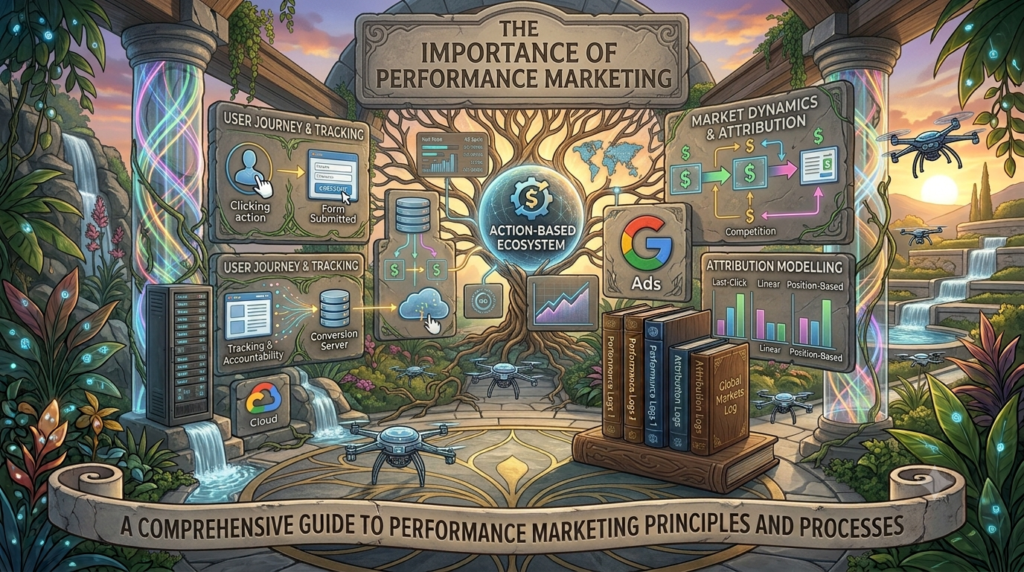
Performance marketing allows businesses to focus on measurable marketing activities. It can help businesses understand where their marketing budget is being spent and what actions are being generated.
Performance marketing can help businesses:
Reach a targeted audience
Generate website traffic
Get potential leads
Increase conversions
Measure campaign results
Test different marketing strategies
Improve campaigns using data
The exact results depend on the campaign, audience, offer, website, budget, and other factors.
How Does Performance Marketing Work?
Performance marketing generally follows a process where businesses set goals, create campaigns, measure results, and optimize their strategy.
1. Set a Marketing Goal
The first step is to decide what the campaign should achieve.
The goal could be:
More website traffic
More enquiries
More leads
More sales
More registrations
A clear goal makes it easier to measure campaign performance.
2. Understand the Target Audience
Businesses need to understand who they want to reach.
This can include researching:
Customer needs
Interests
Search behaviour
Online platforms
Location
Buying intent
Understanding the audience helps businesses create more relevant campaigns.
3. Choose the Right Channel
Performance marketing can use different digital channels, such as:
Search advertising
Social media advertising
Display advertising
Video advertising
Email campaigns
The right channel depends on the target audience and campaign objective.
4. Create the Campaign
The next step is to create advertisements, landing pages, offers, and messages that are relevant to the target audience.
A clear advertisement should guide users toward the desired action.
5. Track the Results
Campaigns can be monitored using metrics such as:
Click-through rate
Cost per click
Cost per lead
Conversion rate
Number of leads
Number of sales
Return on advertising spend
These metrics help marketers understand campaign performance.
6. Optimize the Campaign
Performance marketing is an ongoing process. Marketers can test different audiences, advertisements, keywords, landing pages, and offers.
The data collected from the campaign can then be used to make improvements.
What Is the Role of SEO in Performance Marketing?
SEO and performance marketing use different approaches, but they can support each other.
SEO focuses on improving organic search visibility, while performance marketing can use paid campaigns to generate targeted traffic.
For example:
SEO → Organic Search → Website Traffic → Leads
Performance Marketing → Paid Search/Social Ads → Targeted Traffic → Leads
SEO can help businesses build long-term organic visibility, while performance marketing can provide measurable campaign data and targeted traffic.
Using both approaches can help businesses reach audiences through different parts of the digital marketing journey.
How SEO and Performance Marketing Work Together
SEO and performance marketing can share useful information.
For example, performance marketing campaigns can show which keywords and messages receive strong engagement. These insights can help businesses understand what their audience responds to.
Similarly, SEO research can identify search terms and topics that are relevant to the target audience. These insights can be useful when planning paid campaigns.
The relationship can look like this:
Keyword Research → SEO Content → Organic Traffic
Keyword Research → Paid Campaign → Targeted Traffic
Both → Landing Page → Leads and Conversions
This creates a more connected approach to digital marketing.
Benefits of Performance Marketing for Businesses
1. Measurable Results
Performance marketing focuses on actions that can be tracked. This allows businesses to monitor campaign performance using relevant metrics.
2. Targeted Advertising
Paid campaigns can often be targeted based on factors such as audience characteristics, interests, search behaviour, or location, depending on the platform.
3. Flexible Campaigns
Businesses can test different advertisements, audiences, and landing pages and make changes based on campaign data.
4. Better Understanding of Customers
Campaign data can provide insights into what audiences click on, which messages receive attention, and which actions lead to conversions.
5. Supports Business Growth
When campaigns are planned properly and continuously optimized, performance marketing can support lead generation, sales, and other business goals.
Performance Marketing vs SEO
SEO and performance marketing both help businesses attract people online, but their approaches are different.
| Performance Marketing | SEO |
|---|---|
| Often uses paid campaigns | Focuses on organic search |
| Focuses on measurable campaign actions | Focuses on search visibility |
| Can generate paid traffic quickly | Usually takes time to build |
| Campaigns require advertising budget | Organic clicks do not require payment per click |
| Uses campaign data for optimization | Uses website, content, and search data for optimization |
| Focuses on actions such as clicks and conversions | Focuses on organic visibility and relevant traffic |
Both can be used as part of a broader digital marketing strategy.
Performance Marketing in Digital Marketing
Performance marketing is one part of the larger digital marketing ecosystem.
A business can combine performance marketing with:
SEO – To improve organic visibility.
Content Marketing – To provide useful information to the audience.
Social Media Marketing – To build engagement and brand awareness.
Email Marketing – To communicate with existing audiences.
Website Marketing – To convert visitors into leads or customers.
When these channels are connected, businesses can create a more complete digital marketing strategy.
7 Important Performance Marketing Tips
1. Set Clear Goals – Decide whether your campaign focuses on traffic, leads, sales, registrations, or another measurable action.
2. Know Your Audience – Understand who your customers are and what they need.
3. Choose the Right Platform – Select platforms based on your audience and campaign objective.
4. Create Relevant Ads – Make your advertising message clear and connected to the user’s needs.
5. Use Strong Landing Pages – Make sure the landing page provides relevant information and a clear next step.
6. Track Important Metrics – Monitor clicks, conversions, cost per result, and other metrics that match your goal.
7. Test and Optimize – Regularly test different campaign elements and use the data to improve performance.
How to Create a Digital Marketing Strategy with SEO and Performance Marketing
A business can combine SEO and performance marketing into one digital marketing plan.
Step 1: Understand Your Audience
Identify your target customers and understand their needs, questions, and online behaviour.
Step 2: Research Keywords
Find relevant search terms that your audience uses. These keywords can support both SEO content and paid search campaigns.
Step 3: Build Useful Website Content
Create informative service pages, product pages, blogs, and landing pages that provide value to visitors.
Step 4: Improve Organic Visibility
Use SEO techniques to help relevant website pages become more visible in search results.
Step 5: Run Performance Campaigns
Use paid campaigns to reach targeted audiences and promote important products, services, or offers.
Step 6: Measure the Results
Track organic traffic, paid traffic, leads, conversions, and other relevant metrics.
Step 7: Improve the Strategy
Use the collected data to identify what is working and where changes may be needed.
Conclusion
Performance marketing is an important part of digital marketing that focuses on measurable actions such as clicks, leads, conversions, and sales. It allows businesses to create targeted campaigns and use data to understand and improve their marketing efforts.
SEO works differently by focusing on organic search visibility and long-term website growth. However, SEO and performance marketing can work together. Keyword research, website content, landing pages, and audience insights can support both strategies.
A strong digital marketing strategy does not have to depend on only one channel. By combining SEO, performance marketing, content, social media, and a well-optimized website, businesses can create a more connected approach to reaching and engaging their audience.
Grow Your Business with Vidya Sarthi
Building a strong online presence requires the right digital marketing strategy. Whether you want to improve your organic visibility through SEO or reach targeted audiences through performance marketing, Vidya Sarthi can help you understand and use digital marketing more effectively.
Start building your digital presence today and take the next step toward growing your business online.