Introduction
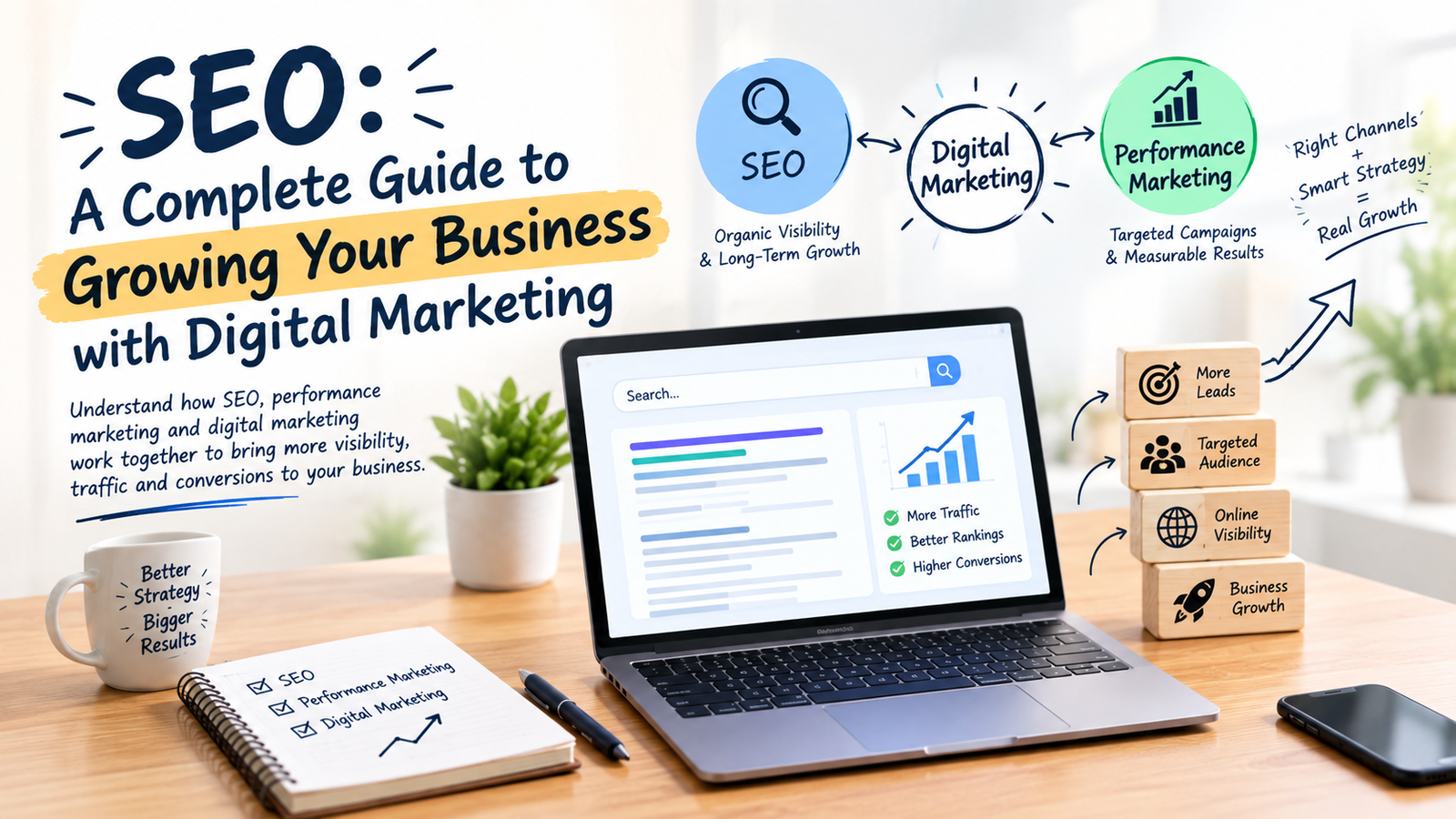
SEO is an important part of digital marketing that helps businesses improve their visibility online. When people search for a product, service, or answer on a search engine, businesses want their website to appear in relevant search results.
SEO can help a business bring organic traffic to its website, while performance marketing can help generate measurable results through paid campaigns. When SEO, performance marketing, and other digital marketing methods work together, they can create a stronger online marketing strategy.
In this blog, we will understand what SEO is, why it is important, and how it connects with performance marketing and digital marketing.
What Is SEO?
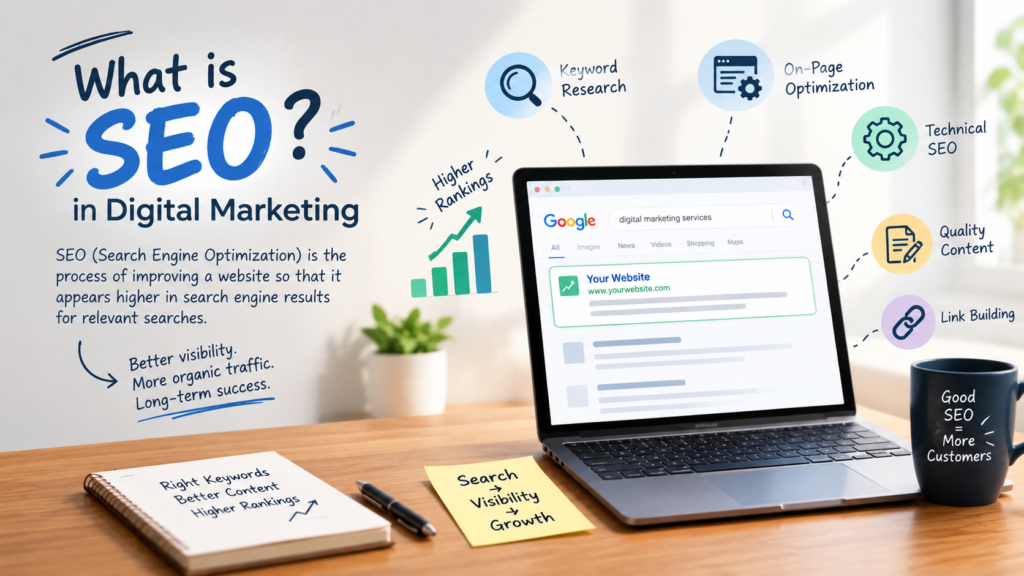
SEO stands for Search Engine Optimization. It is the process of improving a website and its content so that search engines can better understand the website and show its pages for relevant searches.
For example, if a person searches for “digital marketing services,” a business offering digital marketing services may want its website to appear in the search results.
SEO focuses on improving different parts of a website, including:
Keywords
Website content
Page structure
Technical performance
Internal links
User experience
Website authority
The main goal of SEO is to improve organic visibility and help the right audience find a website through search engines.
Why Is SEO Important in Digital Marketing?
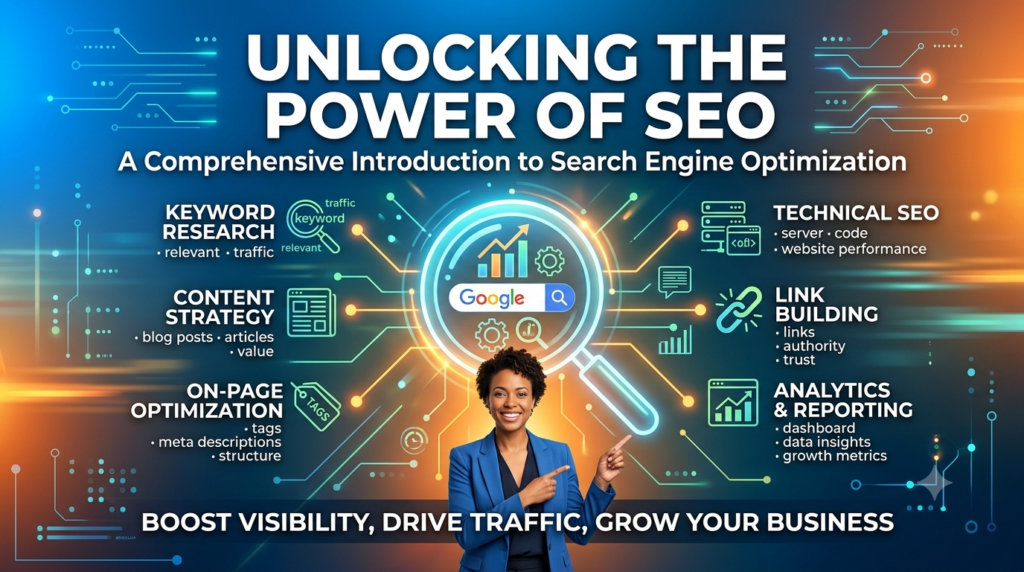
SEO is an important part of digital marketing because search engines are one of the ways people discover businesses online.
A good SEO strategy can help businesses:
Improve online visibility
Attract organic website traffic
Reach people searching for relevant services
Build online credibility
Generate potential leads
Support long-term digital growth
SEO is not only about ranking a website. It is also about creating useful content and making the website easier for both users and search engines to understand.
How Does SEO Work?
SEO involves several activities that work together to improve a website’s search visibility.
1. Keyword Research
Keyword research helps businesses understand what people are searching for online. Businesses can use relevant keywords in their website pages and content when those keywords match the topic and search intent.
2. On-Page SEO
On-page SEO focuses on elements within a webpage, such as:
Page titles
Headings
Content
Meta descriptions
Images
Internal links
URLs
These elements help search engines understand the subject of a page.
3. Technical SEO
Technical SEO focuses on the technical parts of a website. This can include website speed, mobile usability, crawlability, indexing, and website structure.
A technically healthy website can make it easier for search engines to discover and understand its pages.
4. Content Optimization
Useful and relevant content is an important part of SEO. Content should answer the questions of the target audience and provide information related to their search.
5. Link Building
Links from other relevant websites can contribute to a website’s authority and visibility. However, link-building strategies should focus on quality and relevance rather than simply collecting a large number of links.
How SEO Helps a Business
SEO can support a business in different ways.
1. Increases Organic Visibility
SEO can help relevant pages appear in search results for related queries.
2. Brings Relevant Traffic
People who search for a business’s products or services may become potential website visitors.
3. Supports Long-Term Growth
Unlike a campaign that stops when its budget ends, useful SEO content can continue attracting organic traffic over time, although rankings and traffic can change.
4. Builds Online Presence
Consistent SEO can help a business establish a stronger presence around topics related to its products and services.
5. Supports Lead Generation
When optimized pages provide useful information and clear next steps, they can help turn website visitors into enquiries or potential customers.
What Is Performance Marketing?
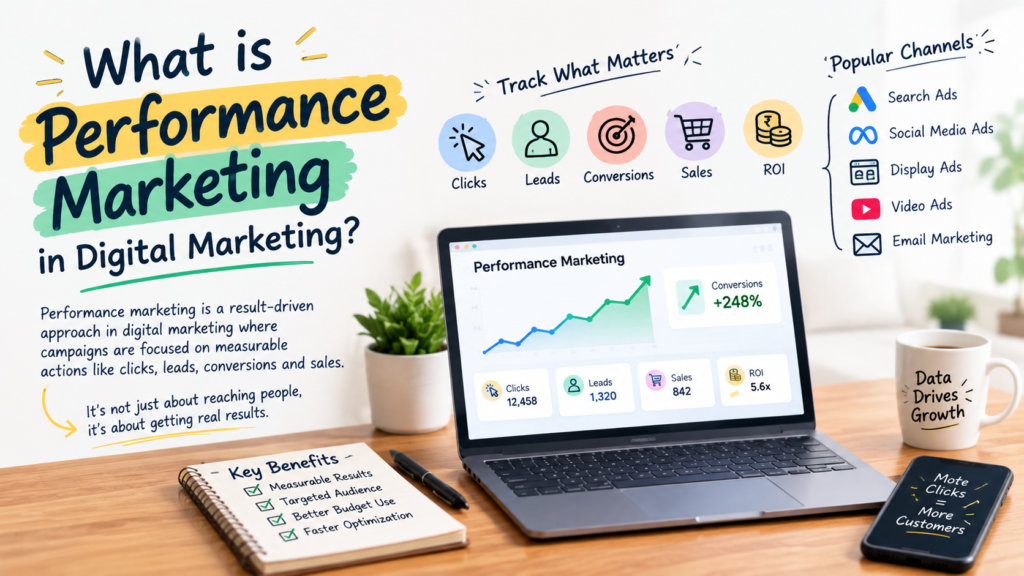 Performance marketing is a result-focused approach to digital marketing. It uses measurable campaigns where businesses track actions such as clicks, leads, conversions, and sales.
Performance marketing can include:
Search advertising
Social media advertising
Display advertising
Video advertising
Other paid digital campaigns
For example, a business can run a paid search campaign for a specific service and measure how many people click the advertisement and how many complete a desired action.
SEO and Performance Marketing: How Are They Connected?
SEO and performance marketing use different methods, but they can support the same digital marketing goals.
SEO focuses mainly on organic visibility, while performance marketing often uses paid campaigns to reach a targeted audience and measure specific actions.
For example:
SEO → Organic Search → Website Traffic → Leads
Performance Marketing → Paid Campaigns → Targeted Traffic → Leads
Both approaches can bring visitors to a website. SEO works on building organic visibility, while performance marketing can provide targeted traffic through paid campaigns.
Businesses can use both strategies depending on their goals, budget, audience, and marketing plan.
How SEO and Performance Marketing Work Together
SEO and performance marketing can provide useful insights for each other.
Performance marketing campaigns can show which keywords, messages, advertisements, or landing pages receive engagement. Businesses can use these insights when planning their SEO content and website pages.
At the same time, SEO can create useful landing pages and content that support the overall digital marketing strategy.
For example:
Keyword Research → SEO Content → Organic Traffic → Landing Page → Leads
At the same time:
Paid Campaign → Targeted Traffic → Landing Page → Conversion Data → Optimization
Using these approaches together can help businesses understand their audience and improve their overall marketing strategy.
7 Important SEO Tips for Digital Marketing
1. Choose Relevant Keywords – Focus on keywords that match your audience, products, services, and search intent.
2. Create Useful Content – Write content that answers real questions and provides value to readers.
3. Optimize Your Website – Improve website structure, mobile usability, speed, navigation, and other technical elements.
4. Use Internal Linking – Connect related pages to help users and search engines discover more relevant content.
5. Optimize Important Pages – Focus on pages that are important for your business, such as service pages, product pages, and useful landing pages.
6. Track Your Results – Monitor organic traffic, rankings, conversions, and other relevant metrics to understand performance.
7. Keep Improving – SEO is an ongoing process. Search behaviour, competitors, websites, and search engine systems can change, so regularly review and improve your strategy.
SEO vs Performance Marketing
SEO and performance marketing can be compared based on how they attract traffic and measure results.
| SEO | Performance Marketing |
|---|---|
| Focuses on organic search visibility | Focuses on measurable paid campaigns |
| Builds organic traffic | Generates targeted paid traffic |
| Usually takes time to develop | Can generate campaign traffic quickly |
| Focuses on content and website optimization | Focuses on campaigns, audiences, and conversions |
| Can support long-term visibility | Provides campaign-level performance data |
Both can be part of a broader digital marketing strategy.
The Role of SEO in a Complete Digital Marketing Strategy
SEO should not always work alone. Digital marketing includes different channels, and each channel can support different business objectives.
A complete strategy can combine:
SEO → Organic visibility and traffic
Performance Marketing → Paid traffic and measurable campaigns
Content Marketing → Useful information for the audience
Social Media Marketing → Audience engagement and brand awareness
Email Marketing → Communication with existing audiences
Website Marketing → Turning visitors into leads or customers
When these areas are planned together, businesses can create a more connected digital marketing strategy.
Conclusion
SEO is an important part of digital marketing that helps businesses improve their organic visibility and attract relevant visitors through search engines. It includes keyword research, content optimization, technical SEO, on-page optimization, and other activities.
Performance marketing takes a different approach by focusing on measurable paid campaigns and actions such as clicks, leads, conversions, and sales.
SEO and performance marketing do not have to compete with each other. They can work together as part of a broader digital marketing strategy. SEO can support long-term organic visibility, while performance marketing can provide targeted campaign traffic and measurable data.
The key to successful digital marketing is understanding your audience, choosing the right channels, measuring results, and continuously improving your strategy.
Build a Stronger Online Presence with Vidya Sarthi
Digital growth starts with the right strategy. If you want to improve your website visibility through SEO, understand performance marketing, and build a stronger digital marketing presence, Vidya Sarthi can help you move forward.
Start improving your digital presence today and take the next step toward growing your business online.