Introduction
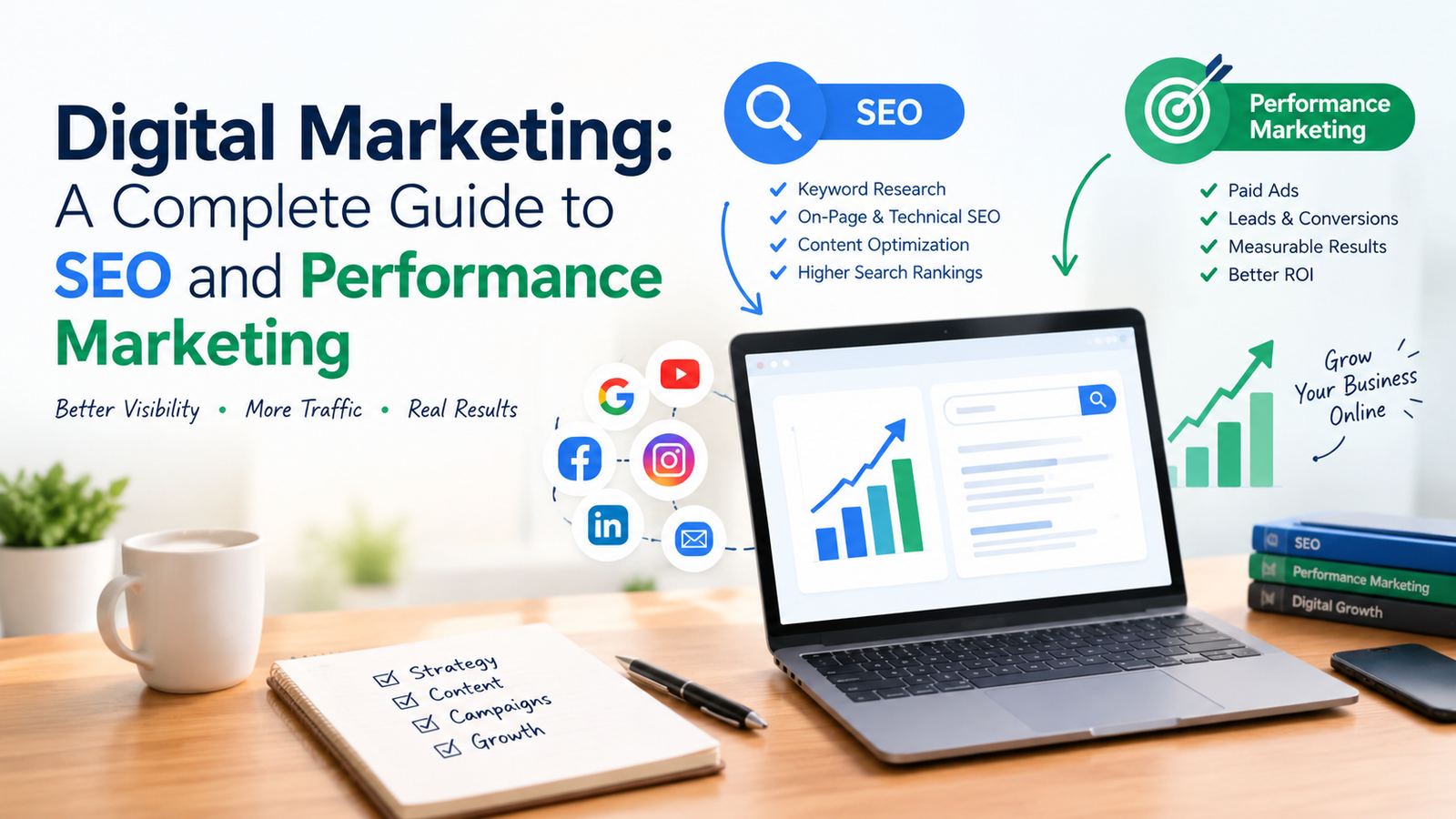
Digital marketing is a skill that helps businesses grow online. Today, people use search engines, social media, websites, and online platforms to find products and services. Because of this, businesses need a strong digital marketing strategy to reach the right audience.
Digital marketing includes many different methods, but SEO and performance marketing are two important parts of it. SEO helps businesses improve their visibility in search engines, while performance marketing focuses on measurable results such as clicks, leads, conversions, and sales.
In this blog, we will understand digital marketing and how SEO and performance marketing can work together to help a business grow online.
What Is Digital Marketing?
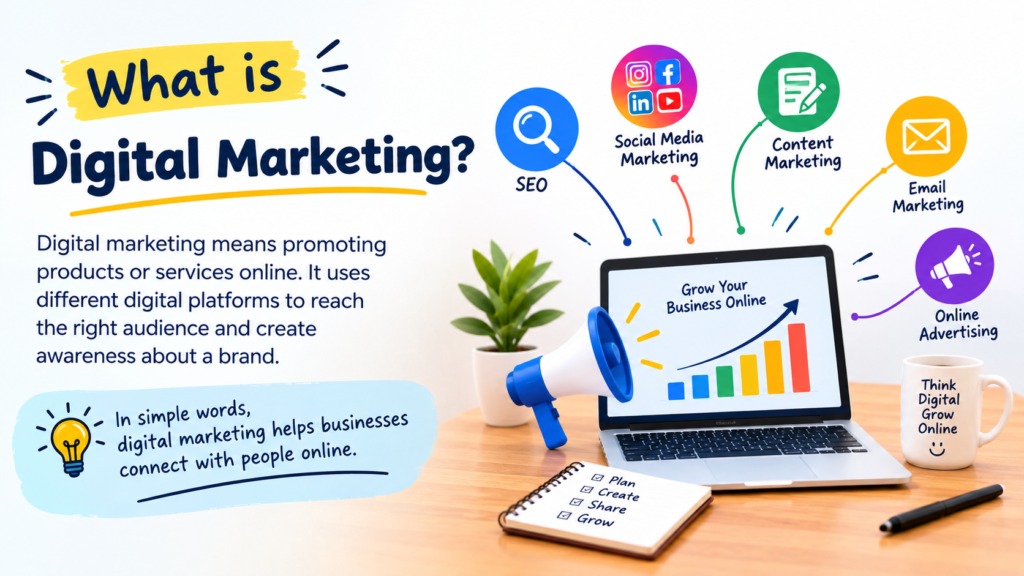
Digital marketing is the process of promoting a business, product, or service through online channels. It helps businesses connect with potential customers where they spend their time—the internet.
Some common areas of digital marketing include:
Social Media Marketing
Content Marketing
Email Marketing
Search Engine Marketing
Website Marketing
Each method has a different purpose, but they can work together as part of one digital marketing strategy.
Why Is Digital Marketing Important for Businesses?
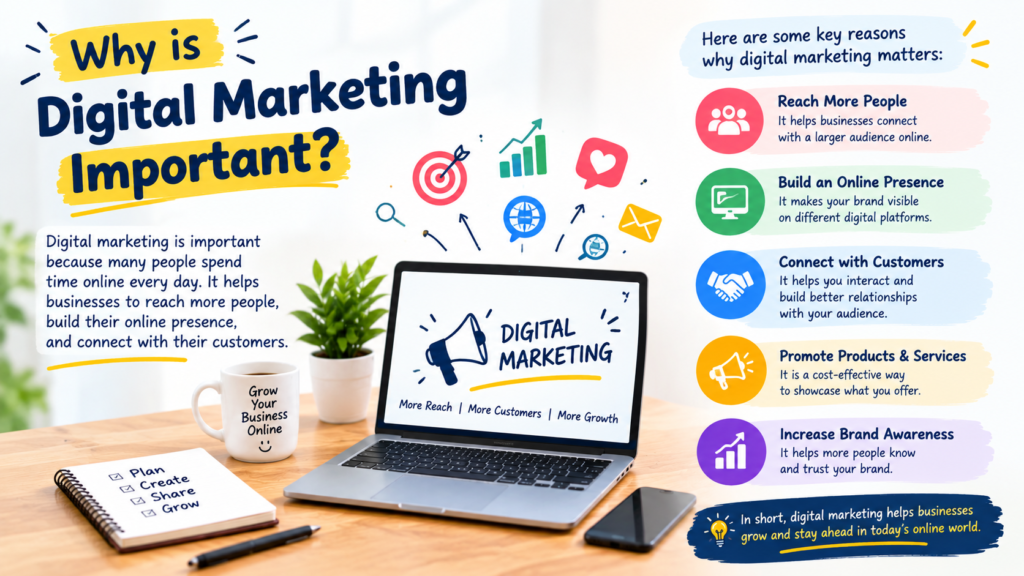
Digital marketing gives businesses the opportunity to reach people beyond their local area. Instead of depending only on traditional advertising, businesses can use online platforms to connect with specific audiences.
Digital marketing can help businesses:
Increase online visibility
Reach a targeted audience
Generate website traffic
Get more leads and enquiries
Promote products and services
Measure marketing results
Build a stronger online presence
A good digital marketing strategy can combine long-term methods such as SEO with result-focused methods such as performance marketing.
What Is SEO in Digital Marketing?
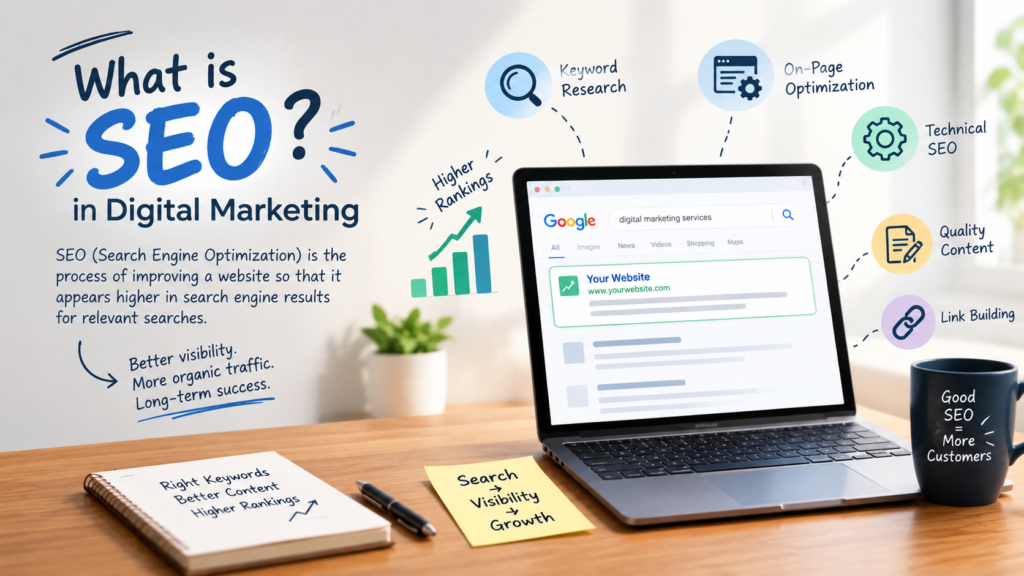
SEO stands for Search Engine Optimization. It is the process of improving a website so that it can appear more prominently in search engine results for relevant searches.
For example, if someone searches for “digital marketing agency” or “video editing services,” businesses want their relevant pages to appear when people are looking for those services.
SEO generally includes:
Keyword research
On-page SEO
Technical SEO
Content creation
Website optimization
Internal linking
Building website authority
SEO usually requires consistent effort because search visibility can take time to develop.
How SEO Helps a Business
SEO can help a business attract people who are already searching for information, products, or services related to the business.
Some benefits of SEO include:
1. More Organic Traffic
A website can receive visitors from search engines without paying for every individual click.
2. Better Online Visibility
Optimized pages can help a business become more visible for relevant search queries.
3. Long-Term Growth
Well-optimized content can continue attracting visitors over time, although rankings can change.
4. Better User Experience
SEO also involves improving website structure, content, speed, and usability.
What Is Performance Marketing?
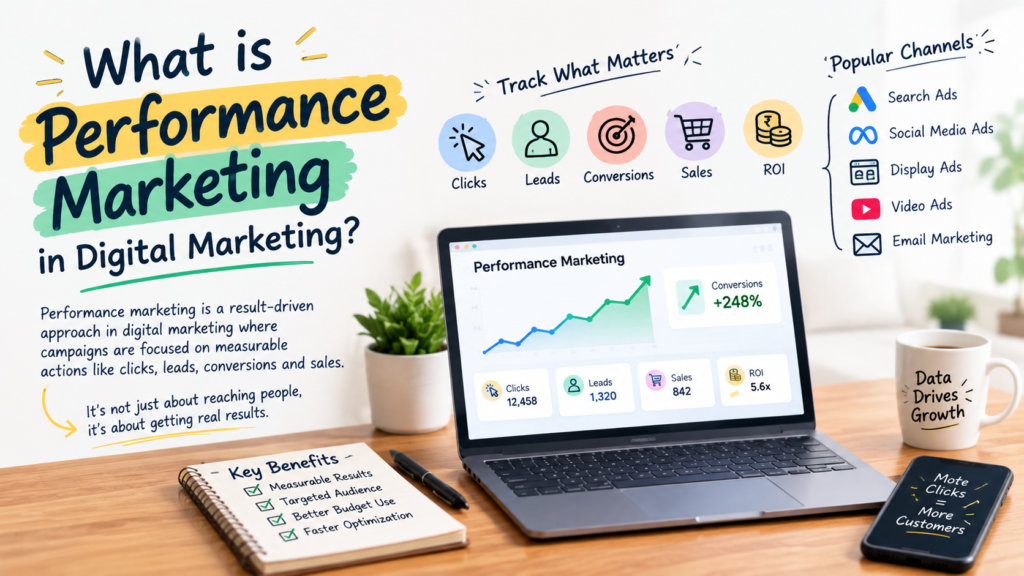
Performance marketing is a digital marketing approach where campaigns are focused on measurable actions and results.
Depending on the campaign, businesses may track:
Clicks
Leads
Website visits
App installs
Conversions
Sales
Cost per lead
Return on advertising spend
Performance marketing can use channels such as search advertising, social media advertising, display advertising, and other paid digital platforms.
How Performance Marketing Helps a Business
Performance marketing can help businesses reach a specific audience and measure campaign performance.
For example, a business can create an online advertising campaign for a particular service. The business can then track how many people clicked the advertisement, how many submitted an enquiry, and how much the campaign cost.
This makes it possible to analyse campaign performance and make changes based on the available data.
SEO vs Performance Marketing
SEO and performance marketing have different approaches, but both can support business growth.
| SEO | Performance Marketing |
|---|---|
| Focuses on organic search visibility | Focuses on measurable paid campaigns |
| Usually takes time to build | Can start generating traffic quickly |
| Focuses on search rankings and organic traffic | Focuses on actions such as clicks, leads, and conversions |
| Requires ongoing optimization | Requires ongoing campaign monitoring |
| Can support long-term organic growth | Can provide faster campaign-level data |
Rather than treating SEO and performance marketing as completely separate strategies, businesses can use both according to their goals.
How SEO and Performance Marketing Work Together
SEO and performance marketing can complement each other in several ways.
For example, performance marketing can help a business bring targeted visitors to a website while SEO works on improving the website’s organic visibility.
The data from paid campaigns can also provide useful information about audience interests and keyword performance. Businesses can use these insights when planning their SEO content.
Together, they can create a balanced digital marketing strategy:
SEO → Organic Visibility → Website Traffic → Leads
Performance Marketing → Targeted Campaigns → Traffic → Measurable Results
When these strategies are planned together, businesses can work on both immediate campaign goals and long-term online visibility.
7 Important Digital Marketing Tips for SEO and Performance Marketing
1. Understand Your Target Audience – Know who your customers are and what they are searching for.
2. Use Relevant Keywords – Choose keywords that match your products, services, and audience search intent.
3. Create Useful Content – Publish content that answers real questions and provides value to your audience.
4. Optimize Your Website – Make sure your website is easy to navigate, mobile-friendly, and useful for visitors.
5. Track Your Marketing Results – Monitor traffic, leads, conversions, and other relevant metrics.
6. Test Your Campaigns – Experiment with different advertisements, landing pages, audiences, and messages.
7. Keep Improving Your Strategy – Digital marketing changes continuously, so regularly review your SEO and campaign performance.
Conclusion
Digital marketing helps businesses build their online presence and connect with potential customers. Among its many areas, SEO and performance marketing can play an important role in attracting visitors and generating business opportunities.
SEO focuses on improving organic visibility and building long-term search presence, while performance marketing focuses on measurable campaigns and specific actions. By understanding the purpose of both, businesses can create a digital marketing strategy that supports their online growth.
The important thing is not only to use digital marketing, but to understand the audience, track the results, and continuously improve the strategy.
Grow Your Business with Digital Marketing
A strong online presence starts with the right strategy. Whether you want to improve your search visibility through SEO or generate measurable results through performance marketing, Vidya Sarthi can help you understand and use digital marketing more effectively.
Start building your online presence today and take the next step toward growing your business digitally.